
Reviewed by Jasmine Alamparambil, a writer.
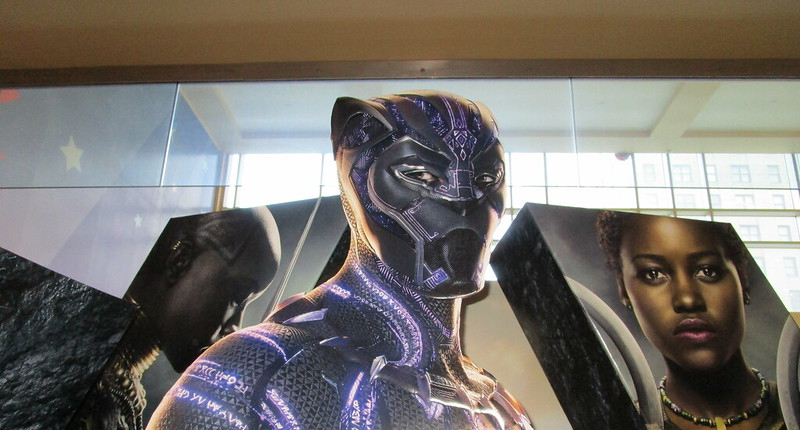
Marvel Studios’ long-awaited Black Panther: Wakanda Forever was released on Disney+ on February 1, 2023. Fans of the first Black Panther film, myself included, yearned to see what would become of Wakanda after the death of actor Chadwick Boseman, who played Black Panther King T’Challa in the first movie. The loss of an actor with such a huge role in the cinematic universe was crushing, especially to those concerned about how the timeline would continue. How could there be a Black Panther movie without, well, the Black Panther?
Thankfully, the writers, along with director Ryan Coogler, acknowledged Boseman’s passing by having a similar death befall his character. In the beginning of the film, it is made clear that T’Challa lost a battle with an unspecified illness, similar to how Boseman lost his life to cancer. After his passing, both his sister, Princess Shuri (Letitia Wright), and his mother, Queen Ramonda (Angela Bassett), have to manage their grief and simultaneously lead Wakanda.
In previous films, Wakanda has been established as the most powerful nation in the world due to its natural resource, vibranium (Earth’s most resilient metal, which simultaneously acts as an energy source). However, the main conflict of the movie centers around Talokan, an Atlantis-like nation from Aztec mythology made up of mutants led by Namor (Tenoch Huerta). These people are found to also possess vibranium, posing a major threat to Wakanda—and the entire world. Shuri, filling her brother’s shoes as the sequel’s protagonist, has to find a way to recreate the Black Panther and face the new danger to her people, all while struggling with the pain of loss.
Put simply, this movie is an homage to both Chadwick Boseman, as an actor and friend, and T’Challa, as a brother and son. The grief displayed by the actors and actresses, especially Letitia Wright and Angela Bassett, are in part their real response to the loss of their co-star and longtime friend. That being said, the plot never lingers too long on him, instead focusing on the other characters and how his death affects their and Wakanda’s place in the world. While the film introduces new characters, the emphasis is really on those that the audience is already familiar with. This connects the audience more intimately with the story and the characters’ emotions.
On the surface level, this movie appears to revolve around the basic conflict between Talokan and Wakanda. But the message is much deeper than one of a physical war—it’s actually about grief, and how it permeates every part of one’s life. While the theme of processing grief is used quite often in films, it still shines through in this movie, especially because it stems from real-life events. Having previously introduced characters be the ones grieving is quite the emotional blow, especially to avid fans of the MCU. But witnessing their journey and character development is much more satisfying because of their pre-existing familiarity.
To be fair, the message is a little too direct and often uses the “wiser and more experienced figure” (Queen Ramonda, Nakia or Namor) instead of communicating through more subtle means, like visual cues or detectable emotion from the characters. Much of the dialogue itself is a bit stiff, and the real emotion shines through the acting rather than the writing. That being said, one unique—and favorable—aspect of the film is its unrestrained use of other languages when deemed necessary. Even without subtitles, the tone and body language of the people speaking mirrors what they are saying, so the message still comes across. Having foreign languages weaved effortlessly into the script gives the movie a sense of realism. Especially in a movie about non-English-speaking nations, it’s absolutely expected for everyone to converse in their native language when alone.
There is a lot of time spent on the story itself when it comes to Talokan and Namor, which is interesting enough from a worldbuilding point of view, but rather unnecessary. The plot should have focused more on the already introduced characters and how they cope with the events that have stricken them with grief. I did like the ending, however, which subverts expectations. Without giving too much away, it sends a clear message to viewers, saying that responsibility to others shouldn’t always outweigh one’s own emotions and well-being.
The cinematography serves the subtle but effective purpose of emphasizing the emotions felt by characters. For example, there’s the shaking of the camera when Shuri learns that her brother has passed and her tears begin to fall. It is as if the cameraperson is crying as well, and, by extension, the audience. And, as in the previous film, the scenery is visually stunning. The capital of Wakanda is a perfect mix of village and city, old and modern. The underwater environments of Talokan are a breathtaking compilation of cool colors and organic buildings, and they parallel those of Wakanda. The score, by Academy Award-winning composer Ludwig Göransson, is beautiful, melodic and fitting, and has that rare quality of underlining the plot without overtaking it.
Shuri was already established as a character who immersed herself in her work in Black Panther. Seeing that her brother’s death pushes her deeper into her lab and away from others was expected, but watching her be set apart from her family was not. Because of her leaning toward science over spirituality, her character arc is far different from her brother’s or mother’s. The other characters, especially newly introduced ones, are very interesting, too, although they aren’t sufficiently explored. Riri Williams is definitely my favorite, mostly because of Dominique Thorne’s incredible comedic timing. I also appreciate the expansion of Danai Gurira’s character, Okoye. Before, most of her personality had been her title of the General of the Dora Milaje. In this film, she’s able to grow in her other qualities, like unwavering loyalty, bravery, and just general badassery.
I definitely related to Shuri’s emotions, recognizing in them what I have felt when some of my family members have passed. It’s difficult to find the “right” way to process grief, especially when you feel as if your responsibilities can’t be neglected. It was immensely cathartic to watch Shuri finally learn to take time for herself, growing in the wake of her brother’s death. And yes, I shed many, many tears over the 160 minutes of emotional discovery by characters I’ve grown to love over the four years since Black Panther.
 Zenith Review Magazine