
Reviewed by Surya Saraf, a writer.
“Violence doesn’t have a race, class, a religion, or a nationality, but it does have a gender.”
So says historian Rebeca Solnit in her hit collection of essays published in 2014, Men Explain Things to Me. Yet anti-Semitism begets harassment and violence against Jewish people, Black men are shot on their daily errands, and violent crimes occur most in impoverished neighborhoods. Solnit’s text is an important one, no doubt—indeed, it gave rise to the term “mansplaining,” used to describe the condescending manner in which men speak to women—but when reading the essays almost a decade later, it becomes evident that Men Explain Things to Me lacks the increasingly prevalent awareness of intersectionality, or the consideration of overlapping social categorizations. In this case, Solnit fails to consider that women of different classes, religions and races live vastly different lives.
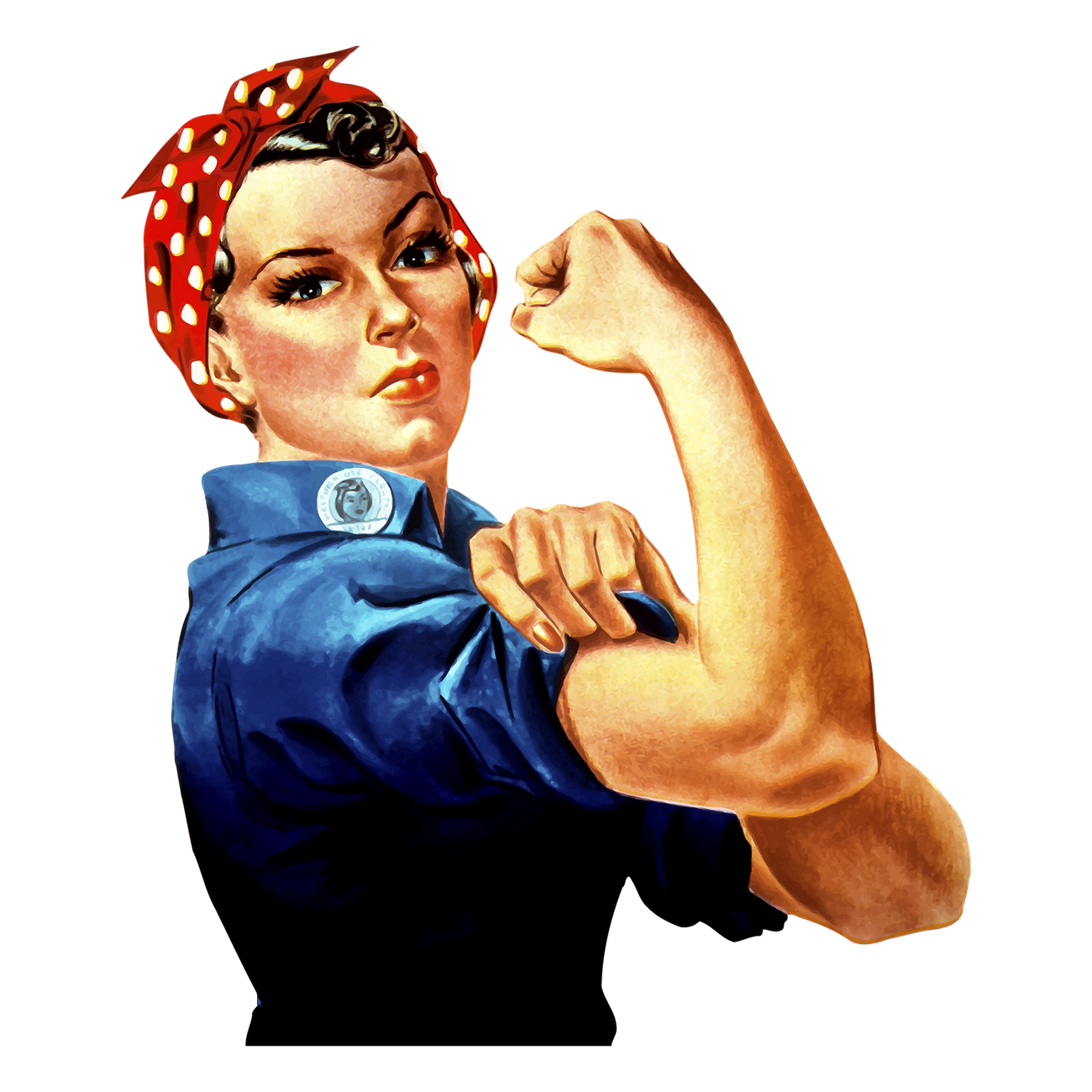
Men Explain Things to Me provides commentary on the oppressed woman: how she is constantly held back in a society that caters to men, and how she must deal with misogynists who talk down to her. Though attempting to be all-encompassing, the essays epitomize what many call the “white feminist” ideology, which is defined as a take on feminism through a purely Western lens. Solnit describes scattered examples of rape and female oppression in Asia and Africa; she calls attention to Jyoti Singh, a woman raped on a bus in New Delhi in 2012, and declares that Singh is to women what “Emmett Till was to African Americans,” as if African American women do not exist or hold enough value to be considered. This is a classic example of “othering,” or classifying a group, often unconsciously, as different. Solnit neglects the fact that African American women suffer on two fronts—as women and as Black women—and simply leaves them out of the mix, an error typifying white feminism.
Ironically, Solnit’s attempts to include all women around the world in her essays only end up alienating them. She starts off the book by blatantly “othering” the Middle East, claiming women there live in societies much worse than “our situations” and that their testimonies have no legal standing in their countries. Solnit’s generalizations reveal the audience her book seems to have been written for: white women. It seems as though these Middle Eastern women are included merely to provide a mask of inclusivity.
So, what is the massive difference between white American feminists and those in the rest of the world, anyway? Western feminist movements are often broken down into First-, Second-, and Third-Wave feminism and characterized by images of Susan B. Anthony and Elizabeth Cady Stanton marching through the streets. Yet, in many developing nations, there is often a heavier focus on women’s struggles with economic disparities and racism because the prevalence of poverty and class difference in developing countries makes feminism a more complex issue. Moreover, activism in non-Western countries is sometimes inconsistent with Western feminist goals (which are often rooted in capitalist, individualistic values), causing many white feminists to view it as misguided and in need of reconstruction. Many women in non-Western countries have claimed to feel pressured or misunderstood by the Western feminist ideology that labels them as eternally oppressed and in need of Western aid.
In her book, Solnit seems to adopt this white savior, white feminist ideology rooted in colonialism. While reading an article from The New York Times on the Taliban, Solnit notes that, in an image, a woman appears to be covered in so much cloth that she is almost invisible—Solnit herself was astonished, mistaking the woman for drapery. She then goes on to label the burqa as a symbol of oppression that masks Afghan women’s true identities, claiming they make women “literally disappear.” Solnit does not seem to grasp the nuances of the situation, as she fails to understand the meaning of the burqa or the hijab: while some women are indeed forced to wear a hijab or burqa, others choose to wear them, perhaps to remain close to God, make a political statement, or seek the modesty it provides. Like many white feminists, Solnit reduces these garments to one-dimensional objects, seeing them as symbols of oppression simply because she does not fully understand their political and social significance.
Despite the book’s faults, it possesses some redeeming qualities. For one, Solnit warns of the dangers of rape culture and the normalization of violence against women. She also does not hesitate to detail female oppression in the West, from rape to catcalling to mansplaining. Additionally, Solnit makes a profound point on same-sex marriage being an indication of the decline in the partiarchy and a loosening of traditional gender roles, leading to a society that may redefine gender expectations altogether. Solnit clearly has an adept grasp of women’s oppression in the West, and certain parts of her book serve as a female voice, or, as she puts it, an inspiration for discourse among all women. Still, the book’s ignorance of intersectionality and of different cultures prevent it from remaining fully relevant in the present day. While Men Explain Things to Me attempts to provide insightful commentary on women’s inequality, it makes generalizations and inaccurate comments about non-Western nations, and, as many white feminist texts do, defines feminist goals and ideologies to be the same all over the world, discounting race, religion and class to achieve its main argument.
 Zenith Review Magazine