
Reviewed by Esosa Zuwa, a writer.
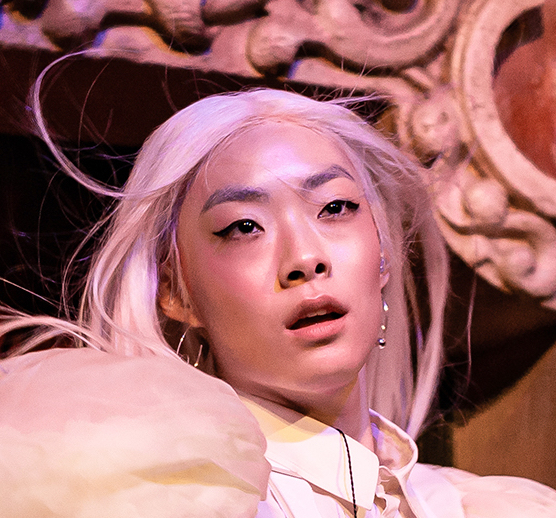
Japanese-British pop singer Rina Sawayama is holding the girl—or holding herself, at least.
Hold the Girl, Sawayama’s second album, was released on September 16, 2022. More personal, toned down, and intimate in its approach than her debut, SAWAYAMA, it still maintains the punchy, alternative, nu-metal, dance-pop sound.
Hold the Girl, mainly recorded in 2020 and 2021, takes listeners on a journey of healing and restoration, bringing to light an inner child long buried inside. The album was birthed out of therapy Sawayama says she took to resolve resonating problems found in her formative years. Thus, Hold the Girl is about not only fixing your problems, but growing up and moving on to who you truly want to be. There is an element of escapism that allows for stillness but then leads you back to the real world, where you feel more secure.
Sonically, the music direction is fairly uniform, with the likes of top producers Clarence Clarity, Paul Epworth, and Stuart Price lending their thematic production to the album. Still, Hold the Girl diverts into distinct subgenres that build on the alternative pop sound. Through the music composition, we witness a range of emotions and experiences, including healing, relief, grief, and anger.
Hold The Girl is specifically structured in a way that represents a process of metamorphosis, as each song change represents a transfer from one state of being to another. The album starts with a short, interlude-like song, “Minor Feelings,” named after the same collection by Korean-American poet Cathy Park Hong, which musically represents long-held, buried-up emotions that compound to become a major hindrance. One lead single, “This Hell,” released in May 2022, is a tongue-in-cheek, feminist pop song referencing Shania Twain, Princess Diana, Whitney Houston, and Britney Spears. It combines country gallop melodies with dance-pop in an in-your-face, irreverent song meant to incense those who take rights away from sexual minorities in the name of religion. The title track, “Hold The Girl,” sets the tone and theme for this album. The song begins with a country-infused R&B ballad before breaking into a hyper-pop chorus, almost in the opposite direction. It starts off sounding powerful and grand, but then falls into an anticlimactic chorus, unable to deliver on its promise. The final chorus, however, is grand and full, as Sawayama pushes herself to achieve what she wants one last time.
Hold the Girl takes a turn in “Catch Me in The Air,” a song similar to a 2000s pop-rock ballad—it’s like the ending scene of a coming-of-age movie. The realization that Sawayama and her mother can support, rather than oppose, one another is belted passionately in lyrics like “Mama, look at me now / I’m flying!” “Frankenstein,” coming after “Catch Me in The Air,” is the loudest, boldest, and most elusive track on the album. It’s a fast-paced, almost frantic pop-rock track infused with techno-indie. It’s monotone but urgent, as Sawayama spurs herself to become a better person, saying she “does not want to be a monster anymore.” “Send My Love To John” mimics “This Hell” in its country melody and message, but differs because it’s from the perspective of an immigrant mother who finally accepts her son’s same-sex partner after years of rejecting him.
Hold The Girl concludes with “To Be Alive,” which wraps things up like a hug to a long-lost loved one who’s finally returned. There is a sense of pure joy at the end of this song, as if one is breaking out of an enclosed shell. Essentially, it is about reconnection and enjoying small moments in life.
Although Sawayama is far from the end of her healing journey, she has reached a point of joy and gratitude. If SAWAYAMA is the brash sibling called into the principal’s office every day, Hold The Girl is the shy, subdued sibling waiting outside the office for them to leave. There is a smooth flow of emotions—which emulates healing—but the album still concludes with a strong message. Hold the Girl ventures into mainstream pop, with a few pockets of Sawayama’s alternative flair inside of them. While remaining true to its theme, it redefines healing through a sonic journey. It’s as if there’s a light coming through this album, leading out into a sunset of hope.
 Zenith Review Magazine