
-
The Holdovers
Reviewed by Aarushi Kumar, a writer.
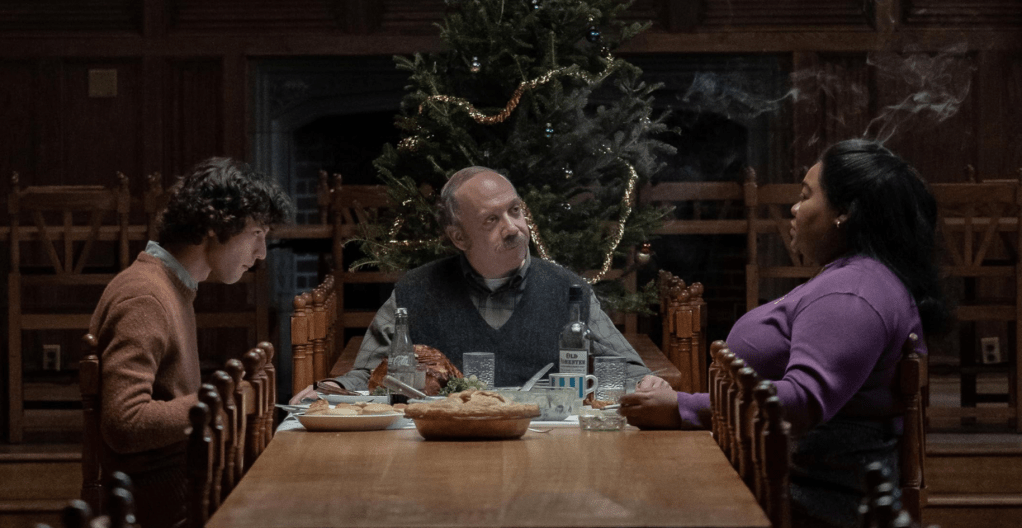
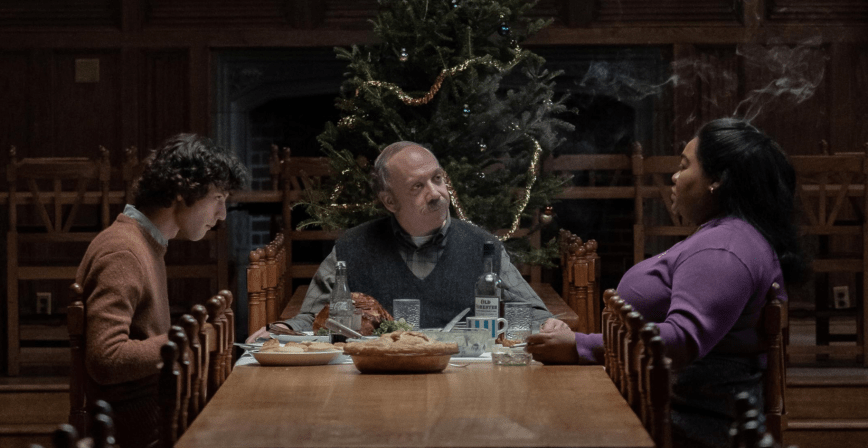
Image courtesy of IMDB. Amongst the nominees for the Oscars’s “Best Picture” award, The Holdovers is standout: a refreshing vision amongst its generally high-concept, tragic, and highly upsetting competitors (excluding Barbie, of course). A heartwarming comedy with a 1970s Hollywood feel, it breaks the stereotype that art must inherently be entirely unique, dire, and somewhat unsettling for it to be deserving of critical acclaim and respect.
The first act—highly reminiscent of Peter Weir’s 1989 film Dead Poets Society—introduces us to Barton, an all-boys boarding school in 1970s New England, and our protagonist: Paul Hunham (Paul Giamatti), a tyrannical classics professor. The film begins the day before Christmas break: Mr. Hunham parsimoniously fails the wealthy sons of school donors, and is consequently punished with overseeing the five students staying behind at Barton over the break—the titular “holdovers.” But, in an Oscar Wilde-esque deux ex machina, one of the holdover’s fathers offers to take all five students on a skiing trip. All of the boys thus exit Barton, except for one: intelligent, sarcastic, and exceedingly angsty Angus Tully (Dominic Sessa) who was unable to get parental permission.
Now, the “holdover” group includes only Mr. Hunham, Angus Tully, and Mary Lamb (Da’Vine Joy Randolph), the school’s head cook who stayed over in an attempt to grieve her son, Curtis, who recently died in the Vietnam War. While navigating holiday parties, “academic” field trips, and adventures in Boston, this moody, quarrelsome trio makes for a comedic, crude, yet grounded depiction of grief, tragedy, and the rare moments of joy one can steal in between.
Since the film focuses predominantly on the relationships and interactions between its three main characters, its storytelling success can be attributed principally to its remarkable performances, namely Giamatti’s and Randolph’s.
Mr. Hunham could have easily become a caricature of the strict, tweed-clad academic who believes themselves to be the absolute peak of intellect, but Giamatti gives him life and complexity by separating his academic behavior from his true personality. Hunham is not a grump, he is grumpy in the face of his snotty students; he is not inherently a dictatorial professor, he is a weary, well-practiced teacher who has found the most success in his harsher methods of teaching. Giamatti shines in The Holdovers’s more tender moments: providing comfort and friendship to Mary, giving advice to Angus, and eventually being vulnerable with both of them. It’s Giamatti’s depth and empathy as Mr. Hunham that elevates the movie from feel-good dramedy to an Oscar-worthy exploration of the events that can build and break down an individual’s chronic pessimism.
Randolph is similarly fantastic, giving a nuanced portrait of a grief-stricken mother navigating her despair. Mary is unflinchingly aware of the difficult hand she has been dealt, yet remains a relentlessly hard worker — even staying at the school over Christmas to feed the “holdover” students. Randolph realistically depicts the experience of a Black woman surrounded by those significantly more privileged than her, who (as teenage boys tend to do) often explicitly disrespect her. She continues to illustrate Mary’s sense of grace, empathy, and wit throughout the heart-rending performance—a difficult task, given how heavy and fresh the character’s grief is.
Outside of plot and character, the film also delivers visually: it uses cinematography reminiscent of 1970s Hollywood, and its muted color palette creates a simultaneously weary but comforting atmosphere that the story thrives in. The Holdovers is a grounded, yet comedic film that has the makings of a long-term family classic. It’s a masterclass in cinematic depictions of melancholy, making its sweet, tender moments all the more satisfying. Watch with friends, family, or by yourself—no matter the context, this film is extremely difficult not to love.
-
The Color Purple
Reviewed by Surya Saraf, a Book Review Editor.

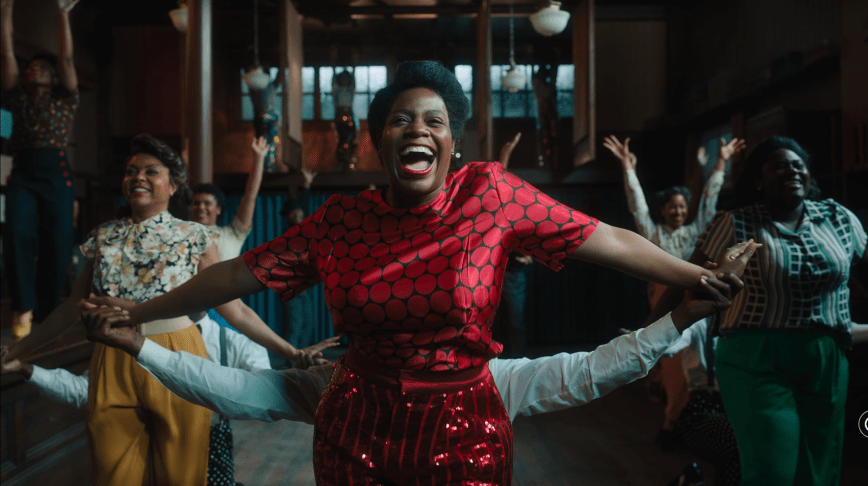
Image courtesy of IMDB. The term “womanist,” as novelist Alice Walker expounds in her novel In Search of Our Mothers’ Gardens, is “[a] Black feminist or feminist of color. A woman who loves other women.” This kind of woman “[l]oves music. Loves dance… Loves Herself. Regardless.”
This definition epitomizes the recent movie adaptation of The Color Purple, a musical exploration of Black womanhood in rural Georgia society that follows the lives of two sisters from 1909-1947.
The film — based upon Alice Walker’s eponymous novel — is a portrait of the Black female struggle: its protagonist is Celie, an uneducated Black girl who is sexually abused by her father figure from adolescence, stripped of the two children she bears with him, and forced to marry and reside with a physically abusive spouse for the next few decades. She grapples with God, whom she doubts is on her side, though her loving sister Nettie assures her otherwise. Enchanted by the extravagant blues singer Shug Avery and tortured by the hardships of her upbringing, Celie hopes to reconcile her relationships with God, women, men, and, most importantly, herself.
Unlike Steven Spielberg’s original adaptation, this 2023 rendition, directed by Blitz Bazawule, is a musical, based on the Broadway adaptation. This change holds special significance partly due to the connectivity between music and Black liberation: Walker includes blues, prayer songs, and other forms of musical empowerment in her novel, and the movie brings them to life. The songs in The Color Purple also provide avenues to express characters’ inner dialogue, something movie adaptations often struggle to do; the numbers craft somewhat heterogeneous characters with unique struggles. The delivery is strong, with captivating dancing, picturesque visuals of flowing skirts on vibrant beaches, and remarkable acting by many Broadway stars.
Most notably, Oscar-nominated actress Danielle Brooks, who plays the character Sofia, exhibits the same boundless strength and confidence I pictured when reading the novel for the first time. Like Fantasia Barrino’s depiction of Celie and Colman Domingo’s Albert (“Mister,” Celie’s abusive husband), Brooks artfully switches from jovial self-assuredness to shattering grief — for split seconds, I would forget that the setting was fictitious. The film does justice to the powerful women Walker crafts, and showcases their influence on Celie’s self-perception and worldview.
Nevertheless, as with any movie adaptation — Hollywood or indie — of novels that present complex issues, The Color Purple falls short of a few major book particulars, and leaves behind plot holes only those who read the novel could pick through. Nearly half of the novel is narrated by Nettie, Celie’s sister, as she navigates life abroad in western Africa. These scenes illustrate the stark differences between the sisters’ lives, but also the ways in which they are invariably connected by blood and love. By merely glossing over this component, the film omits analysis of Celie’s and Nettie’s relationship to African history as African American women. Contrary to Walker’s multifaceted character analyses, the film also presents white characters with little humanity.
Regardless, The Color Purple remains steadfast to Walker’s dialogue, and I have no complaints regarding the phenomenal soundtrack that tastefully includes the Broadway song “The Color Purple.” The pièce de resistance was the inclusion of a variation on Walker’s empowering line: “I may be black. I may be poor, I may even be ugly, but I’m here. I’m here!”
-
The Marvels
Reviewed by Jeri Lieberman-Evans, a writer.
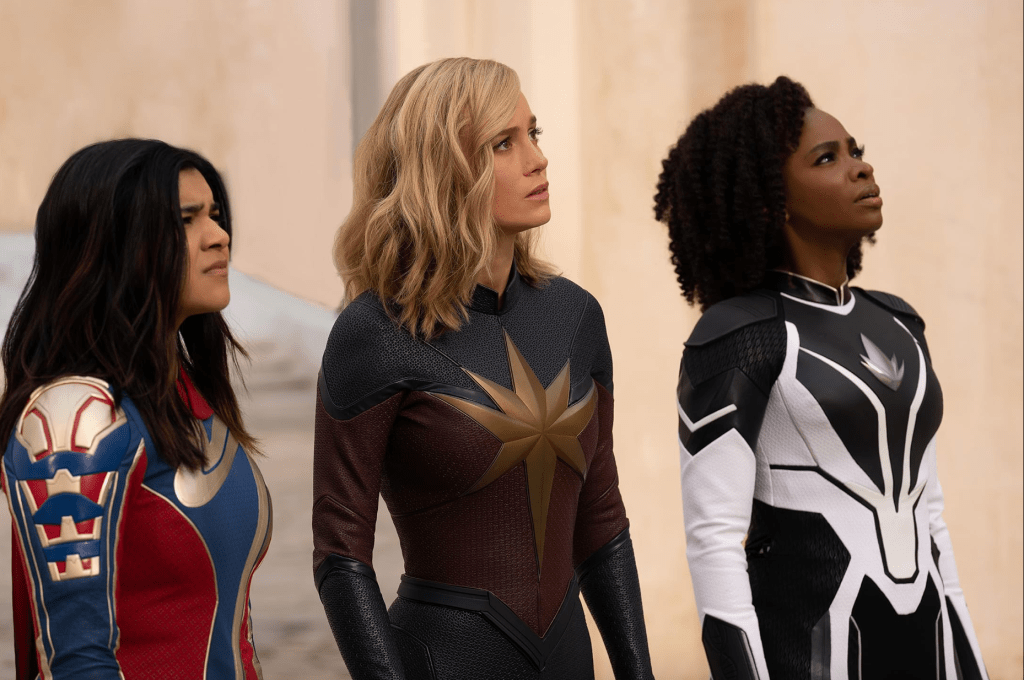
Image courtesy of IMDB. The Marvels was an absolute delight of a movie, complete with singing, dancing, fighting, and alien cat monsters.
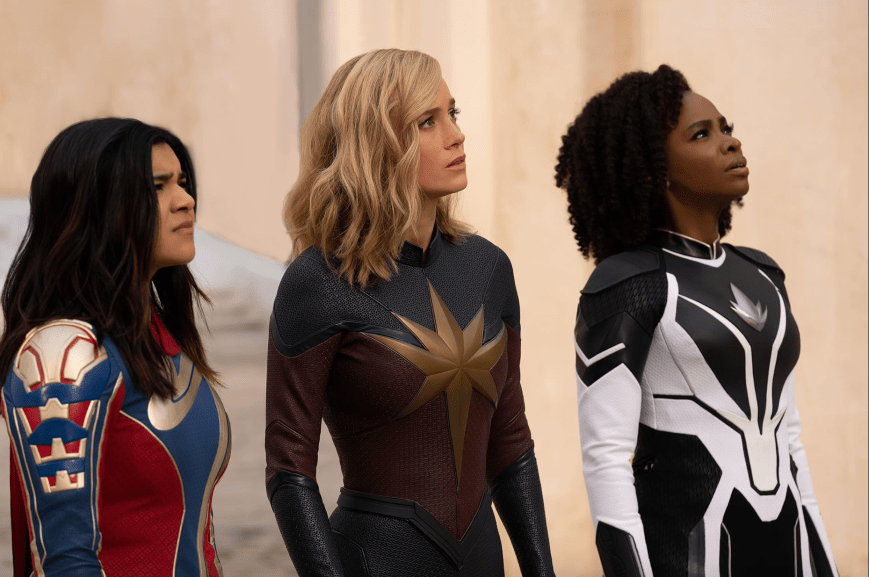
Marvel remains one of the most popular movie studios, famous for its witty, action-packed movies and dedicated fanbase. Its latest release, directed by Nia DaCosta, follows Captain Marvel (Brie Larson), Captain Rambeau (Teyonah Parris), and Ms. Marvel (Iman Vellani) as they navigate their newly interlocked powers and attempt to stop Dar-Benn (Zawe Ashton) from stealing planets’ resources.
In recent years, Marvel films have required increasing amounts of homework: each movie requires understanding the MCU’s complicated web of movies, characters and plotlines. The Marvels, for example, is a sequel not only to Captain Marvel, but also to Ms. Marvel and Wandavision (and, in order to understand Wandavision, one has to watch Avengers: Endgame, before which one must watch Avengers: Infinity War, and so on). Still, The Marvels can be enjoyed without a full understanding of each character’s backstory. Simply be willing to overlook several strange occurrences that will not be explained by The Marvels (if cats start spewing tentacles, just go with it).
With that said, the film was strong overall: entertaining, with a lot of classic Marvel-style witty banter and fight scenes that contrasted with sadder, more impactful moments. Although parts of the ending were rather convenient and unsatisfying (without giving away too much, one simple solution at the beginning could have solved the central conflict), the plot was easy to follow, and the post-credits scene hints at a highly anticipated development in the MCU.
The Marvels is comedic and lighthearted first and foremost: what other movie would have flerkittens (cat aliens) “eating” an entire space shuttle’s worth of people while “Memory” from Cats plays in the background? Still, the humor did not take away from a couple key emotional moments: the movie still discusses weighty themes of family — chosen and biological — and forgiveness.
Moreover, DaCosta takes advantage of the film’s setting — outer space — to experiment with cinematography, costumes, and music. Production designers Gregory Melton and Cara Brower make planets, whether vivacious or desolate, come to life. The characters finally got their official costumes, which perfectly match their comic-book counterparts. The soundtrack was a step up from Captain Marvel, immersing viewers in the film and the superhero genre while also providing distinctive melodic motifs. Aladna (a planet where residents can only communicate through song) provided a bit of musical humor.
The Marvels is one of few female-led films in the MCU, both on screen and behind the scenes. While some have labeled it as tokenism, and others as “woke,” I didn’t think it was either. Unlike Marvel’s previous efforts at female empowerment (such as the “female Avengers unite” scene in Endgame), there was no contrivance or back-patting. The main cast happened to be all women, but it was not the central focus of the film. While The Marvels was not spectacular or groundbreaking in any way, it was still entertaining and fun—which is all I look for in a Marvel movie.
-
Golden

Reviewed by Esosa Zuwa, a writer.

Photo by Kat Smith on Pexels.com As BTS’s youngest member, Jungkook is often dubbed the “Golden Maknae,” or “Golden Youngest.” It’s fitting, then, that Golden is his debut solo album, emphasizing his Midas touch.
Golden is an entirely English album that encapsulates a mainstream pop sound, full of radio and chart-friendly hits. It has catchy hooks that resonate with longtime BTS and Jungkook stans and a mainstream audience. However, it spreads itself thin: through containing dance hits, hyper-pop and garage tracks, slow ballads, and funk-jazz rhythms, Golden feels like a pop album forcing itself to be sonically nuanced.
“I can’t kiss you through the phone or touch you through the universe,” Jungkook sings in the opening line of the second pre-release track, “3D.” Featuring rapper Jack Harlow, the song is a pop-funk track with ’90s hip-hop funk beats and a ’70s jazz bass. It’s straightforward in its deep tone, building up cheekily. It’s one of the more strong tracks on the album, and the most upbeat and enjoyable of the bunch.
The album takes a turn with “Close to You,” making the deep, tropical house song somehow the most experimental in this straightforward album. Jungkook’s vocal fry gives the song both urgency and longing. It builds up in volume, like desire, with lyrics like “Feeling like I’m floating / Something’s in the air tonight / We’re speaking with emotions / Won’t look away.” It’s a calm and hypnotizing kind of song, leading the listener to come on a subtle journey with Jungkook.
The first pre-release, UK-garage track, “Seven,” features rapper Latto and was initially thought to be a love ballad to his fellow members. However, it is actually a sensual song that builds itself up like a conversation with an electric guitar in the background. At first, it feels like a hopeful, innocent serenade, but its evocative lyrics soon say otherwise. It’s a cheeky song that feels silly at first, but slowly endears itself to you—a standout track on the album.
The lead single “Standing Next To You,” a disco-funk, pop song, feels nostalgic and grand. It uses mystical-sounding flutes in dance breaks in a grand band arrangement, with deep, cushioning bass lines. Jungkook’s dreamy voice floats on top of this magnetic track, but in the dance breaks, trumpets create an anthemic feel. It has a guns-blazing, us-against-the-world kind of love, and is by far the strongest of the tracks on the album.
The album’s other songs often amalgamate, with their constant themes of love and basic pop arrangements. But “Hate You” stands out because of its deeply sad, hopeless lyrics, wanting to trade heartbreak for betrayal. “I wish you went behind my back/And told me lies and stuff like that/I wish you kissed someone I know,” Jungkook sings. Written by Shawn Mendes, “Hate You” sounds like tears placed against a sad, synth piano track.
The album finishes with a rising ballad, soft in its tone: “Shot Glass of Tears.” It’s a bittersweet conclusion to the album, one that wallows in complex but negative emotions, trying to drown them.
Golden is an amalgamation of pop influences under a trench coat, cosplaying originality. It feels picked apart and dissected in a lab, bioengineered for perfect charting and radio play in Western spaces. Still, though it’s not ground-breaking, Golden is the perfect introduction for Jeon Jungkook. With powerful performances and choreography, it’s a solid album, and all in English. The album could have dug deeper, moving beyond inoffensive lyrics and vague spins on interesting emotions. But it is pleasant to listen to, full of budding artistry with exceptional tracks within it.
-
Layover

Reviewed by Esosa Zuwa, a writer.

Photo by Lucas Allmann on Pexels.com Kim Taehyung, better known as V, released his debut EP Layover on September 8, 2023, marking the latest installment of BTS solo music. A swinging, simplistic album about love, heartbreak, and longing, it’s inspired by ’50s doo-wop melodies and ’70s jazz. One could say V has an old soul—yet one nevertheless immersed in the present. Curated and created by producers such as Frankie Scoca, Freekind, Jinsu Park, Absent Chronicles and Monro, Layover comes with some layers.
Many of the performances are laid back, and take on the tone of crooner music popular in the ’50s and ’60s. Listening to the tunes, you don’t dance, but rather stand still to feel the music enveloping you. “Rainy Days,” a slow jazz piano piece opening the album, perfectly exemplifies this mood. Backed by a light indie beat, the song is short and the composition is fairly simple, mirroring the slow, mundane days discussed in the song. There’s a vintage charm to the piece that makes it feel like someone is crooning the words in a 1920s jazz bar.“Rainy Days” doesn’t take itself too seriously, but still has a gray, reminiscing melancholy.
“Blue” is much like “Rainy Days,” representing the never-ending cycle of feeling blue. The song utilizes a modern R&B drum beat with a slow, vintage, city-pop-inspired guitar rhythm. The song is about searching for ways to overcome sadness and loneliness, encouraging listeners to find hope inside of themselves and move forward.
“Love Me Again” is like a melancholy monologue laid against the backdrop of a fairly static song that doesn’t change too much in its structure, representing the never-ending longing of heartbreak. There’s a modern lo-fi spin on the doo-wop melodies, making it more upbeat, almost as if to hide away the heartache of the message. The song feels like recording voicemails, practicing conversations for words unsaid to a past lover. “I wish you would love me again / No, I don’t want nobody else / I wish you could love me again, again,” he sings.
“Slow Dancing,” the next song in the album, is like making eye contact with your lover across the room, drawing closer and closer. It feels like being wrapped in the arms of someone you fully see, hear, and know. It combines disco with a neo-soul imaging of a live R&B piece, and V’s voice spills like honey against the rising track. The lyrics “Maybe we / Could be / Slow dancing / Until the morning / We could be romancing / The night away” make it the more sensual track on the album, one that teases you but isn’t trying to be cheeky.
“For Us,” the final track, is an emotional confrontation, a whirlwind of feeling. Although it feels like a climax to a thrilling film, it remains intimate and real. “You went from my home to / It was nice to know you / And it breaks my heart,” V emphasizes at one point, before a slow admission that he’s still not over the relationship: “That we gave it our best shot / Now I’m in California / I’m still waitin’ for ya.” The song’s airy bounce sounds almost angelic; it then slows down before a swirling key change makes it a slow R&B track. “For Us” is the hopeful refrain of rekindling a lost relationship.
The sonically cohesive album feels sophisticated and classy (in no small part due to V’s honey-smooth low register), but fluffy too—a winning combination. Although the themes of heartbreak and longing could have been explored with more depth, ultimately, Layover is simple jazz meant to evoke something calm but melancholy in listeners, something intimate and real—and in this, the album succeeds.
-
Barbie
Reviewed by Judy Smith, a writer.
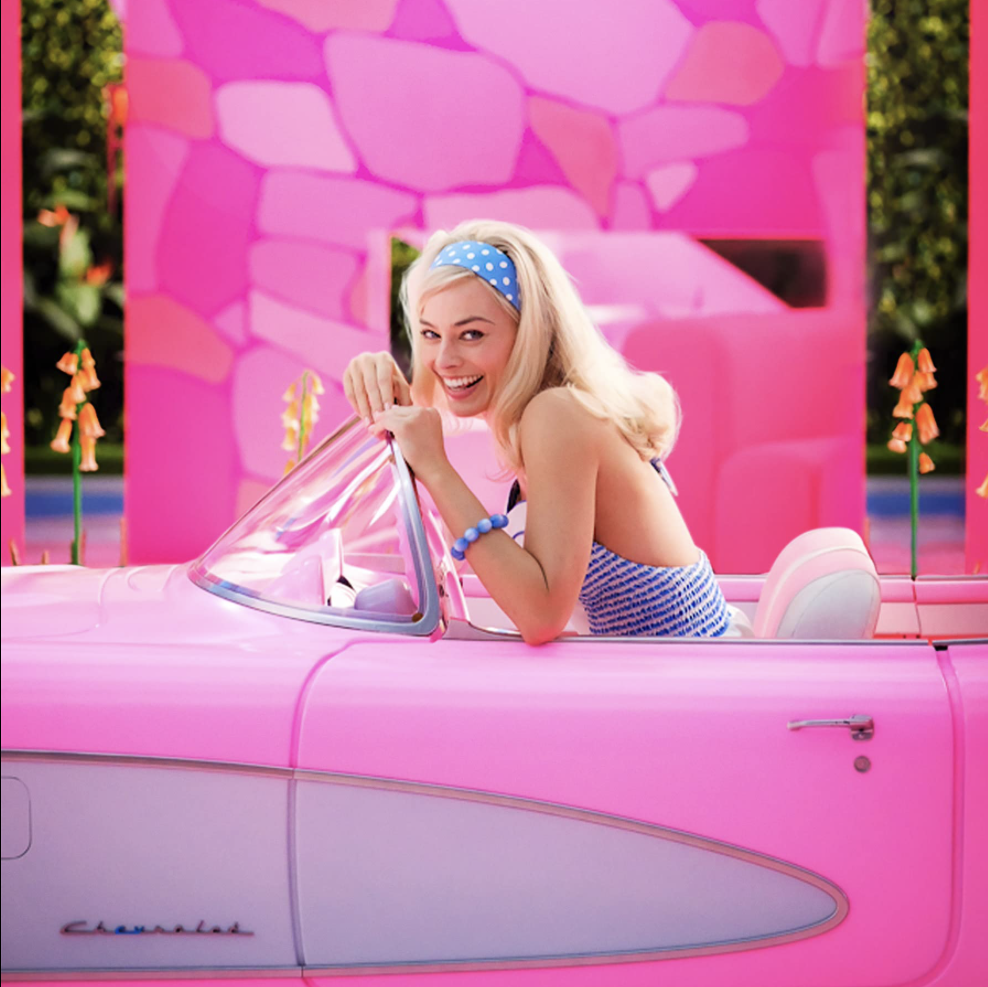
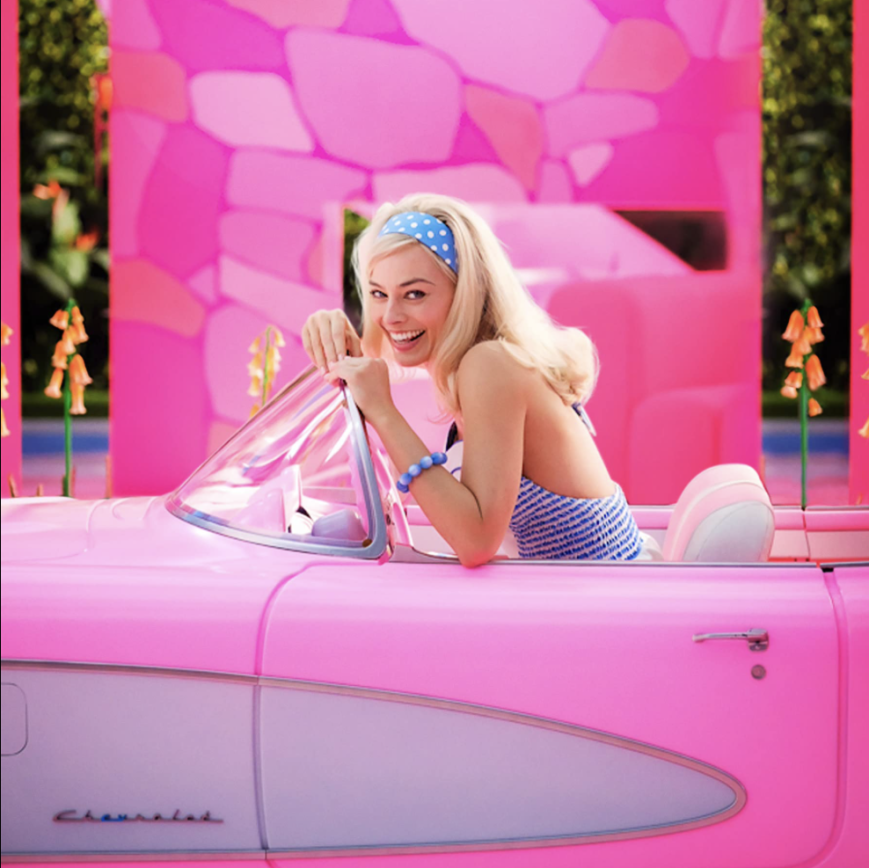
Image courtesy of IMDB. When I heard about the Barbie movie, my first reaction was to run to my best friends and tell them. I wanted to share a part of my girlhood with them. We all got very excited, but my friends were also a bit skeptical. They told me they were scared it was going to be too serious and therefore lose the Barbie magic. I understood their concern, but I also understood you couldn’t make a two-hour movie about losing glitter.
I decided to go see the movie with my friend, and I was very excited — little-girl excited. I walked into the movie normal, and came out normal. Now, this is not to say that the movie wasn’t beautiful and that I didn’t learn something from it. I did learn. But did I cry? No. Did I learn 45 lessons I could write down on my phone, so everyone could see what a good person I was? Nope.
It may be because I don’t watch movies only to learn. When I walk into the movies I’m there for enjoyment and laughs. That’s what I found so great about Barbie. It did have some lessons that were valuable to hear, but at the same time, they kept the fun parts and the jokes. That ensured that the movie wasn’t too heavy to watch.
Two plots
The movie starts in Barbie Land, where Barbie (Margot Robbie) is living her life with the other Barbies. The visuals of this dream world at the start of the movie were incredible and truly got me excited for the movie.
A little ways into the movie, everything goes wrong for Barbie, and she finds out it’s because the girl playing with her is unhappy. Her quest: getting to the human world and talking to the girl. Yet this turns out to be only half the problem, and it’s her and Ken’s slow realization of the insidious power of patriarchy that gives the second half of the movie its drive. These dual storylines, unfolding concurrently, trick you into thinking the first plot is the only plot and also make the movie feel much shorter than its actual runtime.
Characters
What I liked about the characters is that they are very much alike in their views of the world. But at the same time their opinions on friends, love, and life are completely different. Stereotypical Barbie thinks of friends as the first thing in life. Love is simply not a priority for her. On the other hand, Ken thinks of love as the first priority, and friends as a second.
Barbie: The Album
Another defining element of the film was its album. The producers reached out to artists and asked them to make songs for the album. On the album are such artists as Lizzo, Dua Lipa, Billie Eilish, and even Ken himself (Ryan Gosling). One thing the album did miss was Taylor Swift. If they had given Taylor one or two songs, I am sure the album would’ve taken off, especially during the Eras tour craze.
In conclusion, the Barbie movie was perfection: a total of 5 out of 5.
-
The Italian Homemade Company: North Beach Location
Reviewed by Caitlin Ginn, Restaurant Review Editor.
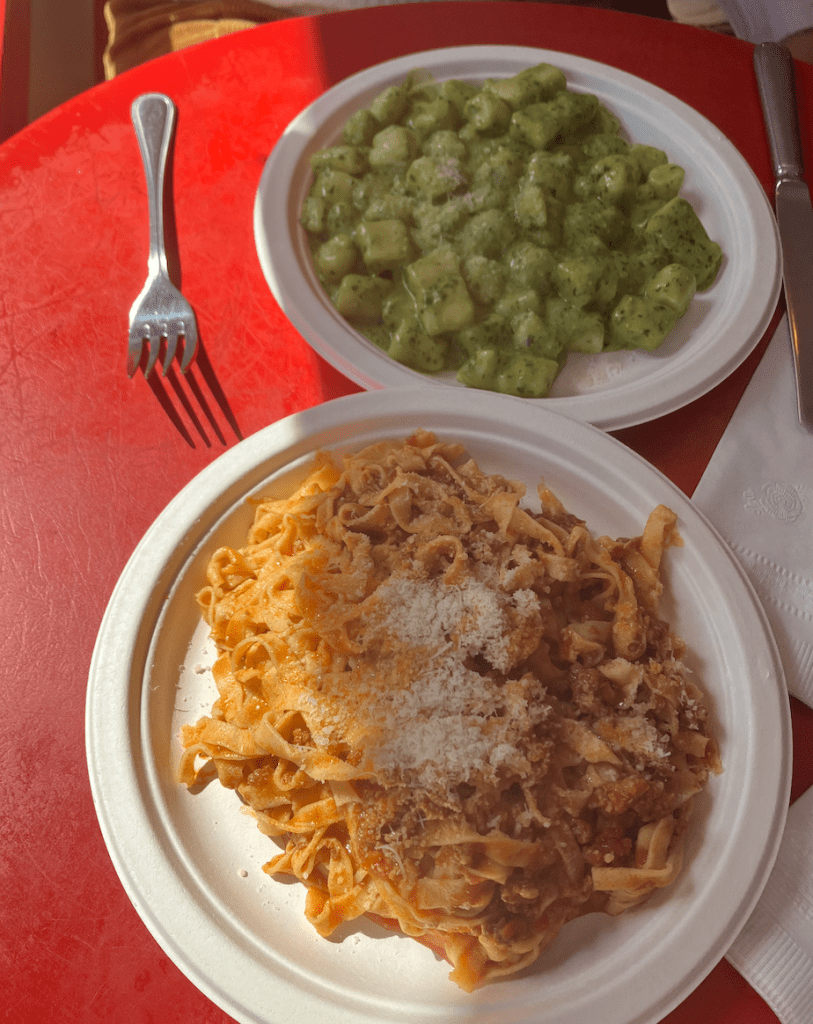
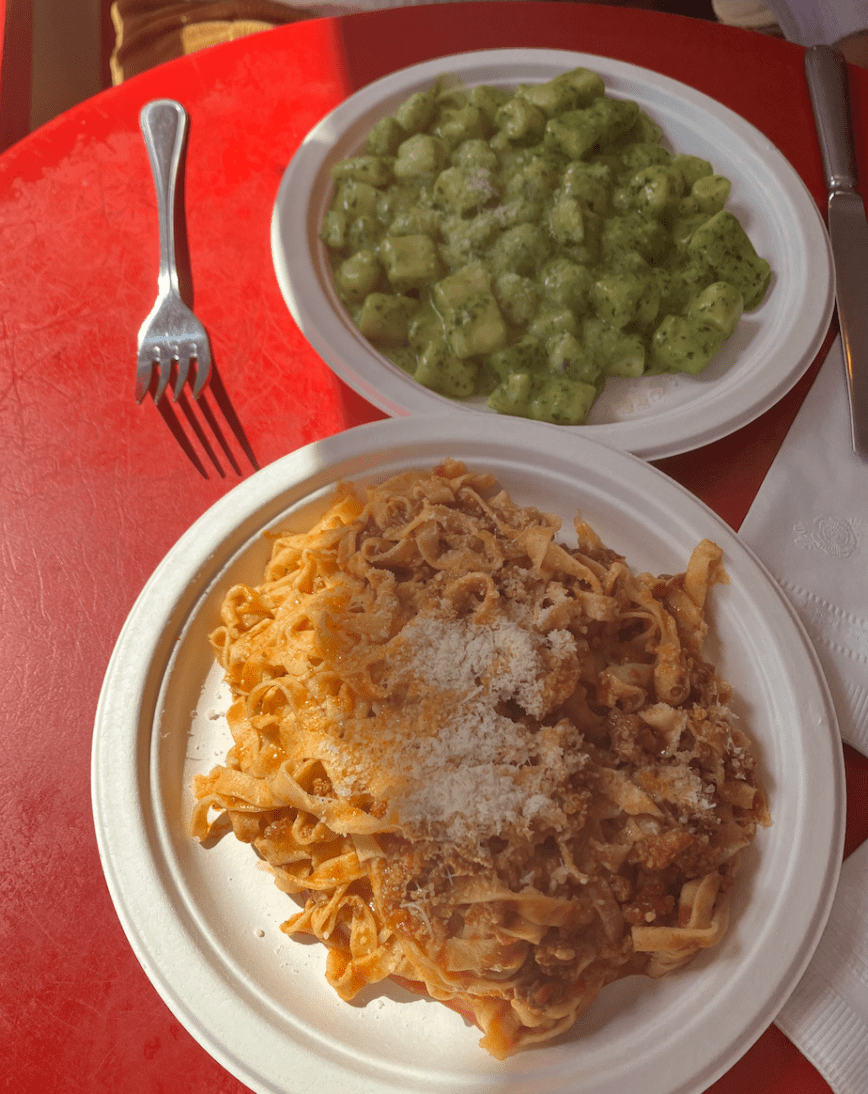
The gnocchi with pesto and the fettuccine with bolognese. Photo by Caitlin Ginn 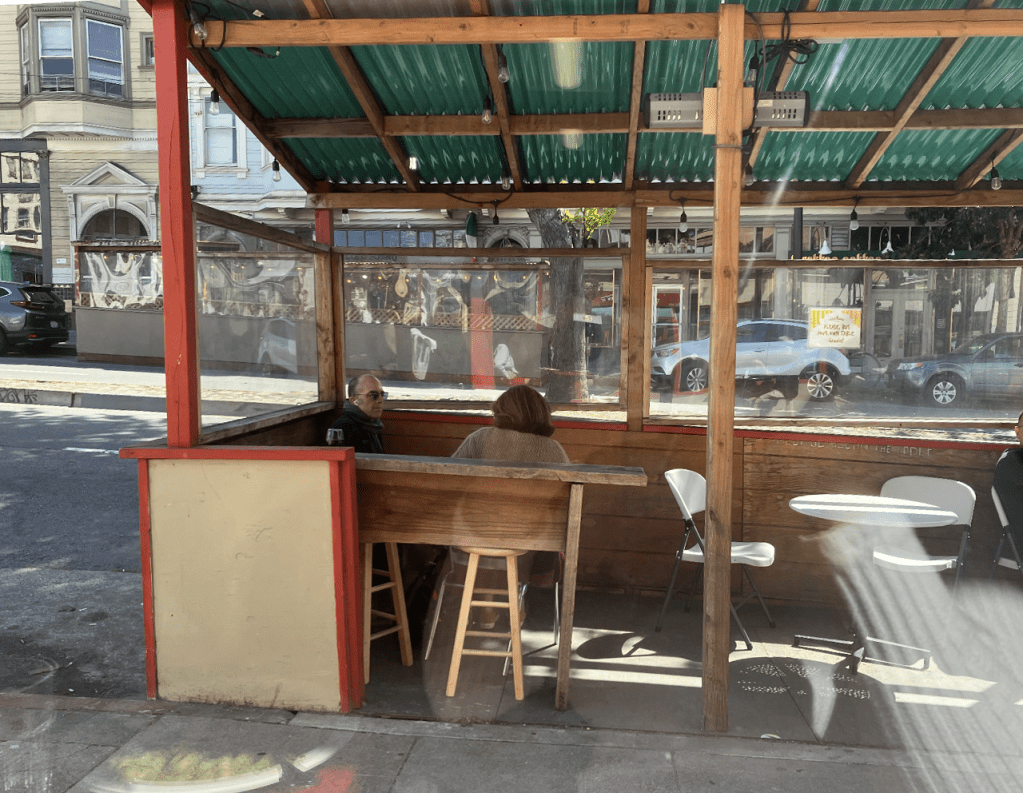
The Italian Homemade Company’s outdoor seating at the North Beach location. Photo by Caitlin Ginn When eating in San Francisco, the struggle is often not finding good food, but affordable food. So when I found myself craving pasta in the city, I thought there was no hope — until I found The Italian Homemade Company. I was shocked by the one-dollar sign on Google Maps: the $10- $20-dollar meal price range seemed too good to be true, but I decided to try it anyway. And I am so thankful I did, because not only is it an adorable restaurant located in the North Beach district of the city, right next to Washington Square, but the food is incredible.
My first impression of the restaurant was favorable: it was small, with tall, bright red tables and bar stools. There were wooden shelves around the walls displaying eclectic items for sale, from wine and imported pasta to books and sauces. The place was packed with people of all ages enjoying meals with friends or date nights, and the overall environment was warm, homey, and very welcoming — not at all stodgy or excessively formal.

The Italian Homemade Company’s indoor seating. Photo by Caitlin Ginn Like many restaurants nowadays, The Italian Homemade Company has both indoor and outdoor seating. Sticking with tradition, though, their menu is written on a chalkboard at the front, rather than digitized and accessed via a QR code. They have a wide variety of Italian comfort foods, from flatbreads and sandwiches to salads and pastas. As much as I would have loved to try every dish on their menu, I was on a hunt for pasta.
In the style of a build-your-own-burger bar, the Italian Homemade Company’s pasta menu allows you to customize. First you choose your type of pasta: fettuccine, tagliatelle, pappardelle, gnocchi, ravioli (veggie or meat), tortellini, or the special. Then you choose your sauce from their expansive list: bolognese, pasticciata, meatballs, marinara, pesto, white sauce, butter and sage, or salsa parmigiano. You can stop here or continue to add more toppings, including meatballs, fresh parmigiano, and a few other choices. I opted for the gnocchi with fresh pesto.
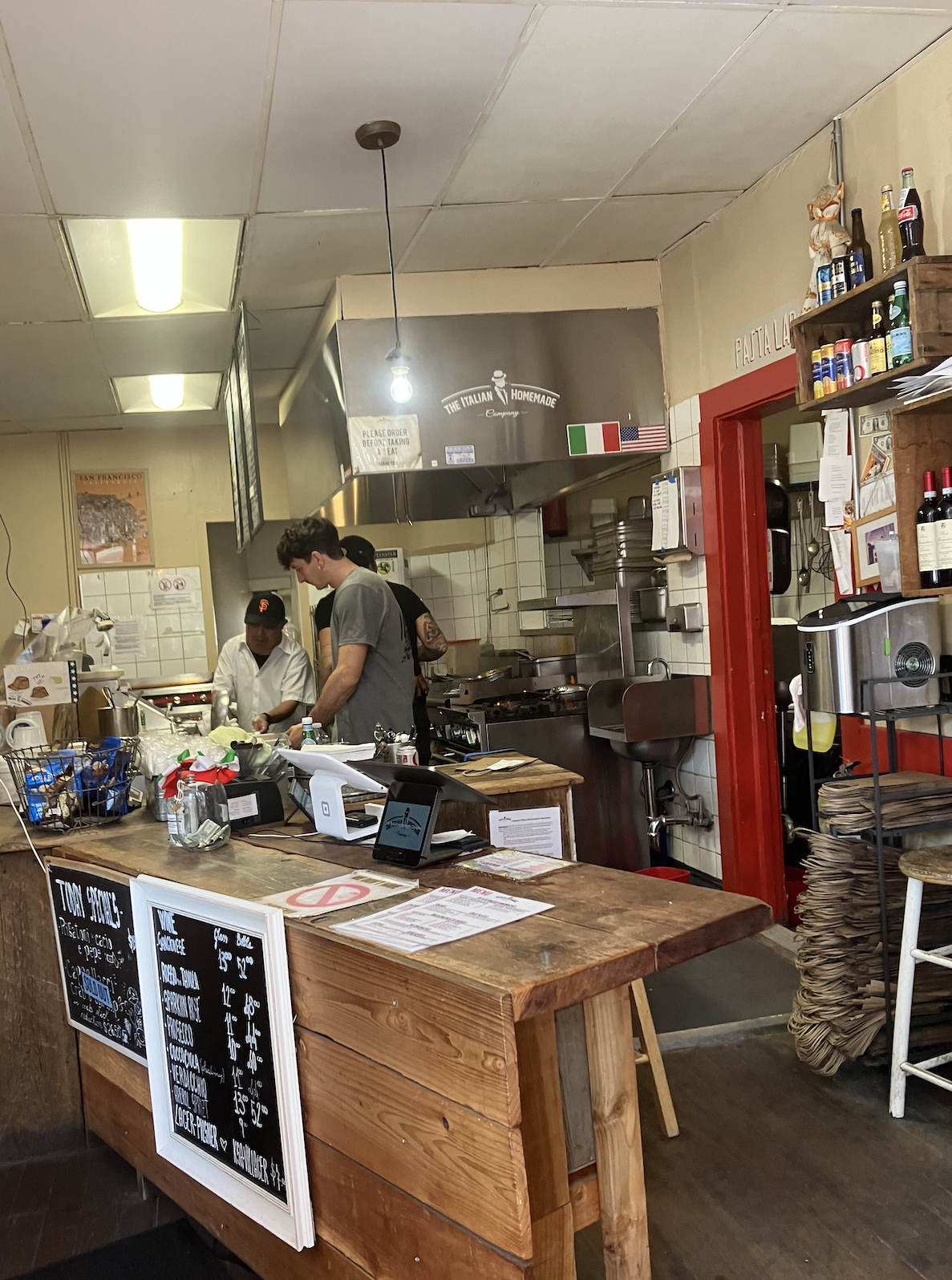
Chefs at The Italian Homemade Company prepare pasta in the kitchen. Photo by Caitlin Ginn As I waited for my order, I took in my surroundings. When I placed my order at the front, the waiters yelled it out to the kitchen, where the chefs were yammering away in Italian through the open diner window. I could see the chefs making the pasta in the back: once they shaped the pasta, they passed it to the cook on the front end, who boiled it and tossed a singular serving in a small pot with sauce and quickly plated it. Here, you need to keep an ear out for when they yell your name, because like most food, this is best steaming hot from the pan.
I got to have my gnocchi with pesto and my friend’s fettuccine with bolognese, both topped with extra cheese. They were incredibly different dishes, the pillowy gnocchi with light, fresh basil pesto contrasting greatly with the thin fettuccine and its rich, decadent tomato-based meat sauce. Despite these differences, I would not be able to choose a favorite even if I had to. I can say without a doubt that I will be returning to sample the rest of their menu when I have a chance, and am especially excited about their variety of house salads.
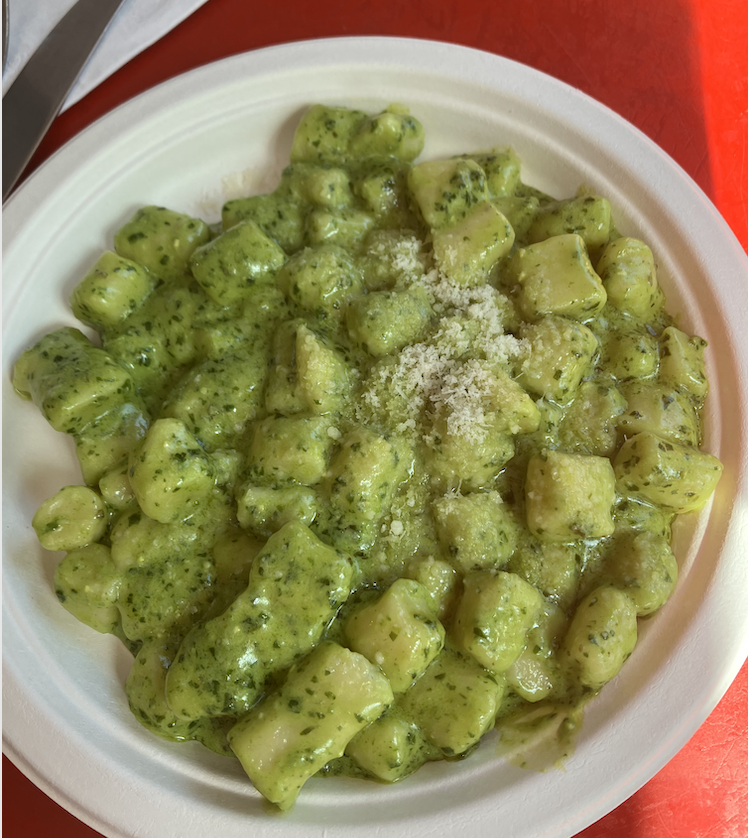
The gnocchi with fresh pesto. Photo by Caitlin Ginn Overall, I would highly recommend this hidden gem in the city. It has affordable, delicious food — and lots of it (I rode the Caltrain home with a box of leftovers in my hands)!
Other locations in San Francisco (Cow Hollow, Hayes Valley), Berkeley, and Long Beach. Hours vary based on location. -
D-Day
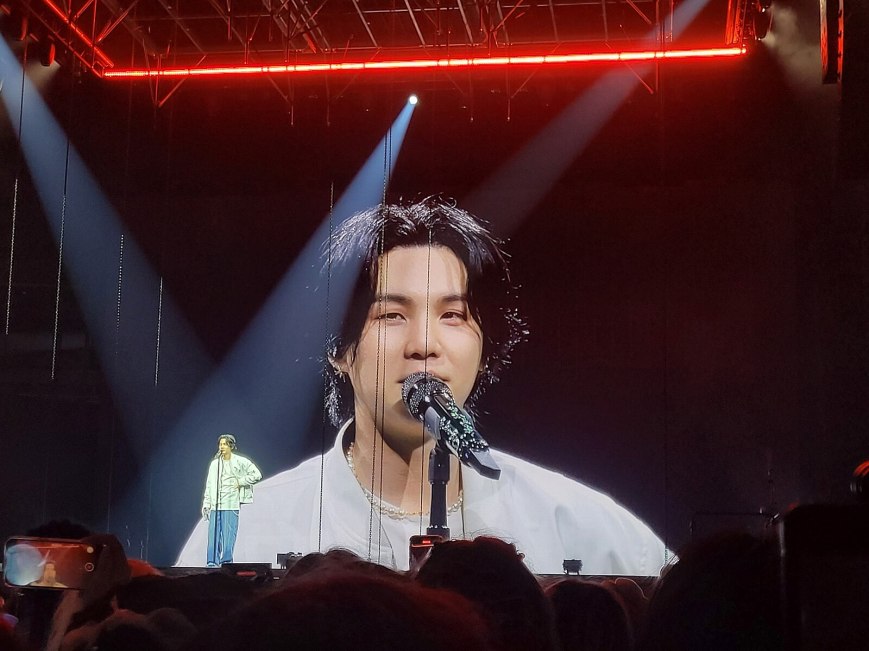
Written by Esosa Zuwa, a writer.
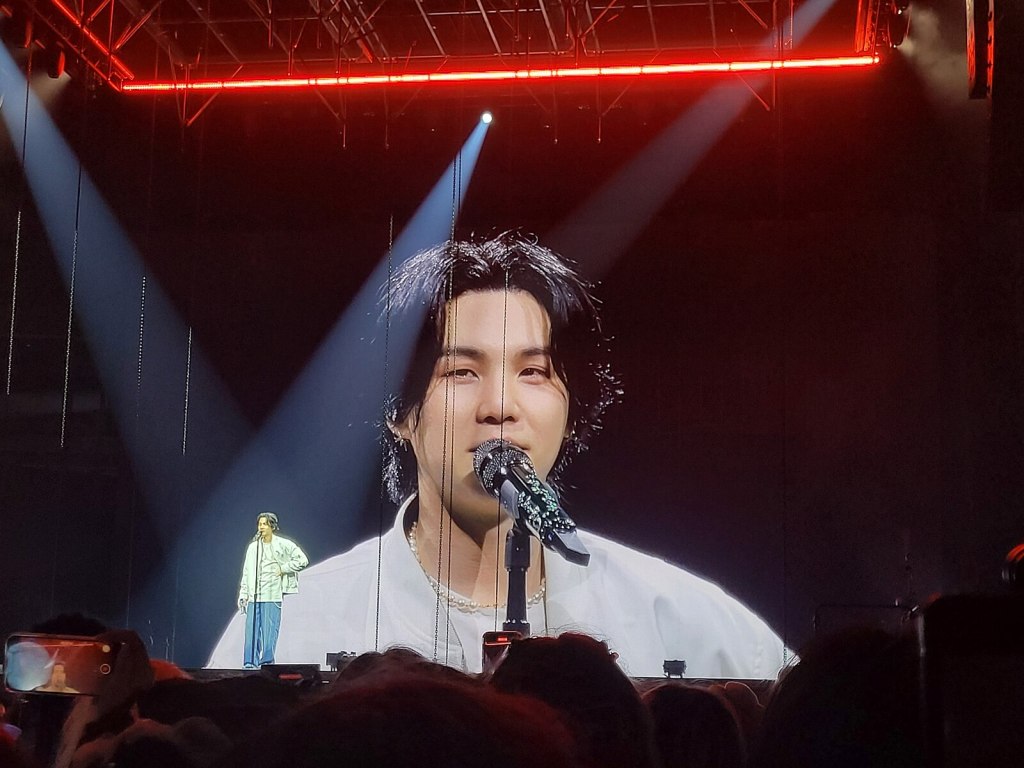
“SUGA of BTS – Agust D Tour 2023 – UBS Belmont Arena April 27, 2023” by Lynn Jatania on Wikimedia Commons, available under a Creative Commons Attribution-ShareAlike 4.0 International Public License. See license here. D-Day is Agust D’s manifesto to the self. It’s the thrilling conclusion in a sonic trilogy about breaking free from the burdens of society. Joined by the likes of longtime BTS producer Kyang Hyo-won (Pdogg) and producer Vincent Watson, Agust D, better known as Suga from BTS, provides thought-provoking social commentary and reflections on regrets.
The pre-release single “People Pt.2,” a collaboration with K-pop star IU, shows how change helps us discover new parts of ourselves, but causes us to lose others. The smooth, chill R&B track contains no intense rap to amplify emotions, but softens to show the fragility of love and how lonely it can be without it.
The album starts off boldly with the titular track “D-Day.” The melody remains uniform in its composition, but there are horns going off in the background, almost as if the song is warning the listener of something. It’s not our attention Agust D is trying to get, however: it’s that of his younger self. He’s reassuring that version of himself that even though the future will be hard, he’ll be all right. The song hangs onto the fleeting promise of youth and grasps at its fragile straws as adulthood looms near.
The album truly picks up with “Haegeum,” a title which contains a double meaning, one sonic and the other thematic. Haegeum is the name of a Korean string instrument, but the word is also used to describe lifting a burden on the human spirit and liberating oneself. The song begins with the sound of a haegeum before breaking out into an explosive trap beat accompanied by a quick-winded, intense rap. Alarms ring through the chorus, almost as if it’s creating a warning that what is to happen is quick, dramatic, and ultimately controversial. As a result, the song introduces a darker tone to the squeaky-clean, controversy-free composition of typical K-pop, even calling people “slaves to capitalism, slaves to money, slaves to hatred and prejudice, slaves to YouTube, slaves to flexin’.” These themes can also be found in “HUH?!” a meteoric drill-beat diss track for people who discredit others’ hard work and criticize them from the narrow lens they view reality from.
In the brain, the amygdala is one of the regions responsible for processing memories. Agust D urges his own amygdala to allow him to reminisce on the past without feeling intense pain in “Amygdala.” There is a gap between the person he has become—the identity that he has shaped—and the crucial memories he has suppressed. He wants these memories back, but does not know if he is strong enough to face them. He wants to feel something, wants purpose like a lotus reawakened, and this begs the question: to what extent do suffering and memory control our lives?
The album ends on a bittersweet but hopeful note, reminding us that no matter what, life goes on. “Life Goes On,” a soft jazz song with a melodic rap that samples and reimagines BTS’s 2020 title track of the same name, lets us know that we cannot stop time to enjoy life, but we can make the best of those fleeting moments.
D-Day is ultimately a means of processing hard feelings, ones that border on traumatic. The newly minted thirty-year-old reflects on his twenties, touching on growing pains, dark relationships, mental health, and the dark side of worldwide success. It feels a little boisterous, with some extra shock value, but it is ultimately healing. The album encompasses Agust D’s darker feelings, ones birthed out of extreme anger, trauma, and dissociation—but it also encompasses his liberation from these feelings.
-
KoJa Kitchen

Reviewed by Caitlin Ginn, a writer.
“Koja Kitchen” by jpellgen on flickr.com, available under a Creative Commons Attribution-NonCommercial-NoDerivs 2.0 Generic. See license here. In the midst of several dining options in Parklab Gardens, San Francisco, lies a gem: KoJa Kitchen, an Asian fusion food truck. Surrounded by tables, turf, tents, and couches sprawled out across roughly a block of San Francisco, the whole environment is very casual and slightly hippie: those ambling by include foodies, wedding party attendees, and random teenagers enjoying a day off from school. The menu, conveniently listed on the side of the truck with pictures and descriptions of all items, features an eclectic mix of fusion dishes, ranging from french fries with kimchi to burgers with fried rice buns to tacos with Korean barbecue.
I ordered the teriyaki zen koja and the beef taco. The koja was an Asian fusion take on a burger, with fried rice buns, a soy and portobello patty, sweet teriyaki sauce, and grilled pineapple topped with sesame vinaigrette lettuce and toasted sesame seeds. The flavors were well-balanced: the sweet teriyaki sauce, which could have been overpowering, was countered by the umami of the patty, the acid of the pineapple, and the freshness of the lettuce. There was also a nice combination of textures—the softer patty worked well with the crunchy fried rice and crisp vegetables.
The beef taco was another feat in fusion cooking. It contained Korean barbecued beef, sauteed onions, hot sauce, Japanese mayo, fried onion, nori flakes, and the same sesame vinaigrette lettuce as the Koja. This dish was also delicious, but the star of the show was by far the koja.
Cost- and convenience-wise, the truck isn’t half bad, either. In keeping with the casual tech-hippie environment of San Francisco, customers place their orders on tablets and pay via Venmo, PayPal, Apple Pay, credit card, or cash. The entire operating system is very easy to navigate, and those in the truck text you once your order is ready (in addition to calling your name out loudly and somewhat incoherently in the old-fashioned food-truck style). It’s evident that the people working at the truck are friendly, even if you don’t interact with them much; they are happy to answer any questions or crack a few jokes about the interesting weather (including the fog, which is apparently named Karl).
Overall, the truck is worth a second visit, especially because of its proximity to a mini-golf course. Make a day of it—tackle the greens, take a seat in the sun, and enjoy the adorable photo booths placed all around.
Other locations in Alameda, Berkeley, Cupertino, Dublin, Emeryville, Fremont, Santa Clara Westfield Valley Fair, Sacramento Downtown, San Francisco Westfield, San Mateo, and Spark Social SF. -
Face

Written by Esosa Zuwa, a writer.
“Park Ji-min during The Wings Tour in Newark, USA on March 24, 2017” by AJEONG JM on Wikimedia Commons, available under a Creative Commons Attribution 4.0 International Public License. See license here. For years, fans have been enraptured by BTS member Park Jimin’s face, watching him deliver dreamy vocals and charm the world with stunning visuals. In his newest album, Face, Jimin asks listeners to look beyond his well-loved visage, giving a glimpse into his self and psyche. Inspired by deep mental introspection during the pandemic and produced by the likes of longtime BTS producers Pdogg and Adora, the songs in Face discuss the tumultuous experience of finding oneself.
These themes are especially prominent in the pre-release single “Set Me Free Pt.2.” It’s a heavy orchestral song that sounds like a baroque-hip-hop reimagining of the Phantom of the Opera. While the beginning is haunting and overwhelming, bringing to mind an evil monarch from a dark fantasy novel arising and looking at his subjects, the tone brightens later on. A breath of fresh air, “Set Me Free Pt.2” breaks out of the corporate, try-hard, bubble-gum pop rebellion and manufactured authenticity characteristic of traditional K-pop music. Still, the song falls short: it is overwhelmingly loud, and it tries to be everything all at once.
“Like Crazy,” the title track of this album, succeeds where “Set Me Free Pt. 2” fails: it spins deep house music and ’80s synth-pop in a blender and gives listeners a dreamy indie disco beat. The tune evokes the pleasant butterflies one might feel in the presence of one’s crush, but also encompasses deeper themes, discussing the duality of the self.
The album takes a strange but interesting turn in“Interlude: Dive,” which has no lyrics and instead uses bits of miscellaneous audio compiled together. The song starts off sounding like a backwards loop, as if everything that exists is being sucked into some vacuum. It grows more intense until it stops with a knock on a door. Subsequently, smooth, lo-fi melodies emerge, overlaid with audio snippets of spoken words, breathing, and Jimin speaking while a crowd cheers loudly for him. There are no words, but the audio present tells a story: Jimin lets us in on the duality of being a global star, universally adored, but lonely nonetheless.
The next song, “Face-off,” has a rebellious, angry tone that, like “Set Me Free Pt.2,” breaks the flawless, unauthentically sad aesthetic of K-pop. Starting off with a horn melody similar to that of a circus or carnival, it then transitions into deep vocals followed by a trap beat, utilizing bells and strings to create an angelic backdrop in the post-chorus. It’s hauntingly beautiful. “Face-off” confronts pain, rather than avoiding it, and like “Interlude: Dive,” it delves into two selves—one put-together and tidy, the other raw and rebellious. It also pits those who want Jimin to conform to their standards and perform for their enjoyment against Jimin himself and his sense of personhood.
Finally, there’s “Alone,” the climax of self-discovery. It’s a smooth, jazzy, lo-fi ballad that builds upon itself with a soft guitar and piano, escalated by a ticking alarm clock in the background. The song dives into the truest form of fear: loneliness without distraction. Jimin embarks on his journey with this isolation and looks to finally come to terms with the person he has been hiding from.
Face, although not revolutionary, is a deeply personal album. It helps listeners examine themselves as humans and understand how deeply entrenched strong emotions can become. Carried by Jimin and his soft vocals, Face is assertive, solidifying identity and a sense of self.
 Zenith Review Magazine

